VIPTA is a statewide infection prevention and control education collaborative, led by the Virginia Healthcare-Associated Infections Advisory Group. Through partnership, VIPTA curates IPC resources for Virginia’s healthcare, congregate care, and public health settings.



“Wait – Do I Need PPE for This?” Making Sense of Enhanced Barrier Precautions
Infection prevention in long-term care takes teamwork—and sometimes a little extra reinforcement. It’s been a year since CMS formally added Enhanced Barrier Precautions (EBP) to infection control guidance, and that big question— “Do I need PPE for this?”—still comes up.
EBP expands personal protective equipment (PPE) use beyond isolation, applying to high-contact care like wound care, changing linens, and bathing. EBP is key to stopping the spread of multidrug-resistant organisms (MDROs) in long-term care facilities, but it takes clear systems and consistent staff education to make it stick.
What to Expect: This month’s resources are designed to meet your team where they are—whether you’re providing direct care, coordinating therapy, or supporting infection prevention efforts facility-wide.
- 8 Moments of Enhanced Barrier Precautions: Simple visual education tool. If you’ve ever heard “Do I need PPE for this?”—this tool is your new best friend. Also available in 8 other languages!
- VDH’s Enhanced Barrier Precautions in Nursing Homes Algorithm: This decision-making tool breaks down when and why to use EBP in plain language.
- CDC’s EBP Implementation—Observations Tool: Built for infection preventionists and facility leads, this resource helps track EBP use and identify areas for coaching
How to Use These Resources:
- Share the 8 Moments visual in breakrooms, care stations, huddles, or staff emails.
- Use the algorithm and observation tool to support your facility’s infection control plan or prep for survey readiness.
Enhanced Barrier Precautions are a big shift, but they’re not a solo effort. Whether you’re providing direct care or leading infection prevention and control (IPC) efforts, these tools are here to help you do the work and explain the why. Infection prevention is always evolving, but so are we.



Taking Antimicrobial Stewardship Beyond Hospital Walls: Community Outreach for Smarter Antibiotic Use
In an innovative effort to extend antimicrobial stewardship beyond the hospital setting, Carilion Clinic’s Antimicrobial Stewardship (AMS) team launched a community outreach initiative aimed at educating families about appropriate antibiotic use. Patient expectations play a key role in outpatient antibiotic prescribing. Meaningful conversations between patients and providers around antibiotic necessity are needed.
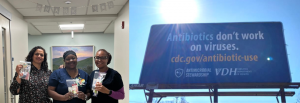
Carilion aimed to deliver accessible messaging through visually engaging billboards across southwest Virginia, reinforcing public health messages such as “Antibiotics don’t work on viruses” and “Antibiotics aren’t always the answer when you are sick.” Complementary posters in clinic waiting rooms provided patients and families with quick education, addressing common misconceptions about antibiotics for viral infections and raising awareness about potential antibiotic harms.
To further support their youngest patients, the AMS team partnered with a large pediatric practice to distribute “fever care kits” to improve at-home temperature tracking and symptom relief. Each kit contained a thermometer, simple symptom relief items, and an educational bookmark on fever and infections. These tangible resources helped empower caregivers to manage mild illnesses confidently at home and understand when antibiotics and healthcare visits might be unnecessary.
Early feedback from clinicians has been overwhelmingly positive, many of whom reported that these initiatives facilitated more productive conversations with patients about antibiotics. By bringing stewardship principles directly into the community, this is one more way Carilion’s AMS team is helping to reduce antibiotic misuse, slow the development of resistance, and preserve antibiotics’ effectiveness for future generations.