Virginia Infection Prevention & Control Training Alliance (VIPTA)

Upcoming Events


Infection Prevention and Control Training Power Tools logo

Your Infection Prevention Training Toolbox is Ready to Go

Need a quick win for your next training? These VDH Infection Prevention Power Tools are ready when you are. Use them for education days, World Hand Hygiene Day (May 5th), or quick huddles, with practical, engaging activities you can grab and go to make infection prevention stick.

What to Expect

  • Training Step-by-Step Guides: Ready-to-use guides that walk you through delivering engaging IP trainings from start to finish. Each includes clear instructions, materials, and tips so you can confidently lead activities like Caught Red-Handed, PPE Fashion Show, Glowing IP Education, and Creating an Educational Game.
  • Hands-On Learning: Interactive activities designed to get staff thinking, talking, and applying infection prevention in real time. Use tools like Rank the Risk, IP Sketch Pad, and puzzles to spark discussion, reinforce key concepts, and make learning stick.

How to use it:

  • Kick off World Hand Hygiene Day: Run Caught Red-Handed during shift change to quickly show missed spots and reinforce good hand hygiene technique.
  • Annual education days: Use PPE Fashion Show to train a large group in a fun engaging way while using a limited number of PPE supplies.
  • Downtime: Set up puzzles and coloring pages as a low-pressure way to reinforce key concepts like isolation precautions or transmission routes.

Target Audience: Essential IPC Education Level


Guidance & Regulation Updates

VIPTA members track guidance and regulation resources to share source documents that guide infection prevention and control practices for public health staff and clinical and non-clinical healthcare personnel.

The date of the regulation or guidance update is included in each post.  Please check linked content to be sure it is the most up to date and recommended practice.

CDC: Core Elements of Hospital Diagnostic Excellence (DxEx) (February 4, 2026)
CDC
Acute Care Hospital
Acute Care Rehabilitation or Long-Term Care Acute Hospital (LTACH)
Assisted Living Facility (ALF)
Department of Health
Hospice and Palliative Care
Nursing Home / Skilled Nursing Facility (SNF)
Core Elements of Hospital Diagnostic Excellence (DxEx) (February 4, 2026) The Diagnostic excellence (DxEx) provides guidance to implement actionable strategies within hospitals to enhance diagnostic accuracy through improved diagnostic reasoning, testing methodologies, and communication processes, ultimately elevating patient safety standards. It encourages the implementation of systematic approaches and evidence-based practices for improving diagnostic processes, ultimately aiming to reduce errors and increase patient safety across healthcare settings.
CDC: Clostridioides difficile Infection (CDI) Surveillance (March 19, 2026)
CDC
Any Practice Setting
Department of Health
Surveillance
Clostridioides difficile Infection (CDI) Surveillance (March 19, 2026) The guidance on Clostridioides difficile (C. diff) emphasizes the importance of implementing prevention strategies, including appropriate antibiotic use, enhanced infection control practices, and patient education to reduce the incidence of C. diff infections in healthcare settings. It highlights the role of the Emerging Infections Program (EIP) in monitoring C. diff cases, promoting research on infection trends, and improving response efforts to effectively manage outbreaks and improve patient care.
VDH: Clinician Letter – Updates on Virginia Department of Health Vaccine Recommendations (2/19/2026)
VDH
Department of Health
Pediatric / NICU
Vaccination
Clinician Letter: Updates on Virginia Department of Health Vaccine Recommendations (2/19/2026) The clinician letter reports that Virginia recommends continued use of the American Academy of Pediatrics 2026 immunization schedule despite recent federal changes, emphasizing that current vaccine guidance should remain grounded in established scientific evidence and clinical best practices. The letter also states that there are no changes to Virginia school immunization requirements and urges clinicians to continue offering recommended vaccines and use clinical judgment in shared decision-making with patients and families.
CDC: Considerations for Reducing Risk – Water in Healthcare Facilities (2/6/2026)
CDC
Any Practice Setting
Water Management
Centers for Disease Control and Prevention (CDC) Considerations for Reducing Risk: Water in Healthcare Facilities (February 6, 2026) CDC recommends establishing a water management program that identifies risk areas in a facility’s water system and implements controls to prevent harmful pathogens like Legionella. The program should be routinely monitored, documented, and adjusted to ensure it remains effective and responsive to changing conditions.
ASHRAE: Ventilation of Healthcare Facilities (2/16/2026)
Any Practice Setting
Air Quality
Ventilator
The American Society of Heating, Refrigerating, and Air-Conditioning Engineers (ASHRAE)  Ventilation of Healthcare Facilities (02/16/2026)   The 2025 edition of ANSI/ASHRAE/ASHE Standard 170 outlines minimum ventilation requirements for health care facilities, emphasizing compliance and best practices for HVAC system design.  Key updates include the option for natural ventilation, total outdoor air calculations for combined spaces, and clarified requirements for imaging and outpatient areas. 

Celebrating Patty Bracy’s Creative Leadership in Infection Prevention Education

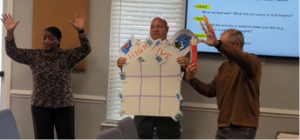
Patty Bracy, Infection Prevention and Control Nurse Manager at Eastern State Hospital, continues to raise the bar for engaging education in behavioral health settings. At the hospital’s Quality Expo, she showcased not only her expertise, but also her creativity and commitment to making infection prevention meaningful for every staff member.
Using the Expo’s Pi Day theme, Patty transformed infection prevention core concepts and data into an interactive learning experience. Staff from nursing, administration, central office, IT, environmental services, and physicians visited Expo stations, collecting stickers that earned them pie and coffee.
Patty’s display blended clear, relevant data with hands-on activities covering hand hygiene, N95 fit testing, isolation precautions, mask types, regulated medical waste disposal, and distinguishing urinary tract infections from asymptomatic bacteriuria. She incorporated puzzles, question cards, and other bite-sized learning tools that made complex topics approachable. The board was so effective that it’s now being used for roving education throughout the hospital.
Attendees stayed engaged and asked thoughtful questions, proof that her approach resonated. Patty shared how much she enjoys her role and collaborating across departments, and with the support of her leadership, continues to grow professionally, recently earning her LTC-CIP certification!

Tools and Tips to Get Started
Patty’s Go-To Resources

Patty’s Tips to Get Started

  1. Choose a theme that’s fun, timely, or relevant to your audience.
  2. Pair data with interaction – puzzles, quizzes, stickers, or small challenges keep people moving and learning.
  3. Use bite-sized education so staff can engage quickly without feeling overwhelmed.
  4. Invite multiple departments to create a sense of community and shared purpose.
  5. Repurpose your materials for ongoing education after the event.

IPC Education & Training Library

Search the VIPTA library of curated infection prevention and control (IPC) education and training resources. The IPC Education & Training Resource Library includes state and national resources related to healthcare-associated infections, antimicrobial resistance and/or IPC. Visit the VIPTA FAQ page to learn more about VIPTA library content.


Connect With VIPTA